
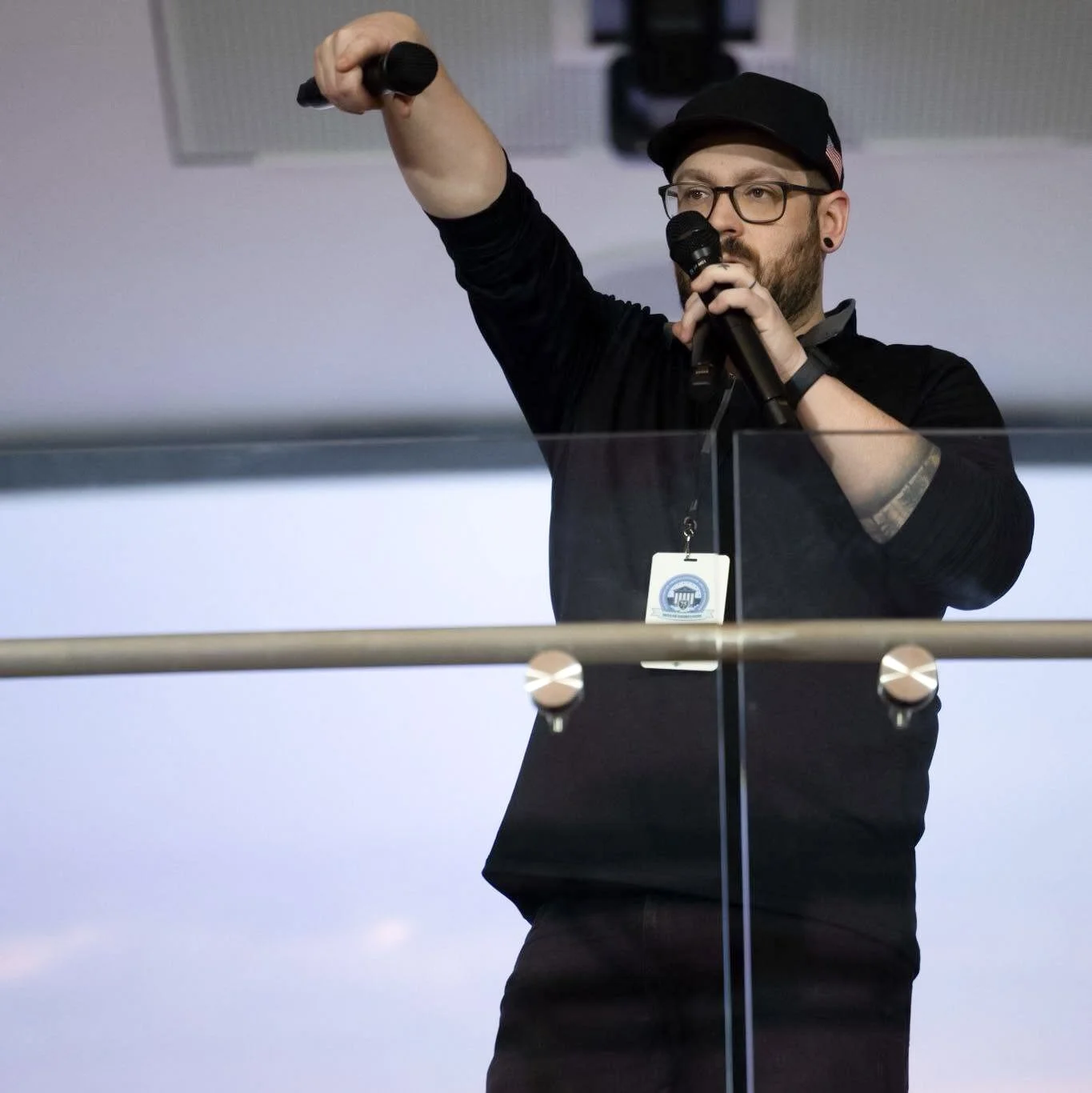
Four days to build. Ninety minutes to experience. A day and a half to take apart.
That was the timeline for one recent Markham production in rural New Mexico, where Timothy "Tim” Oldmixon spent nearly a week helping transform a remote site into a fully functioning event space. As a Production Manager at Markham, Tim works at the intersection of technical design, logistics, and on-site execution, bringing together the teams and systems that make live experiences possible.
But after years in the industry, Tim has learned that successful production is not only about equipment, plans, or precision. It is about the people doing the work.
That belief was shaped by his career in live audio, where he learned to think quickly, solve problems under pressure, and understand the demands placed on show crews. Today, those experiences guide the way he leads teams, supports technicians, and creates events that connect with audiences.
Finding the Work that Clicked
Tim was introduced to live production while he was still in high school.
Traditional academics did not always feel like the right fit, so he pursued a work-study opportunity at Marist College. The experience placed him in a professional environment earlier than most students. He spliced tape, digitized analog recordings, supported college theater productions, worked on Battle of the Bands, and radio station events.
“They threw me into the fire pretty quick,” Tim said.
The work gave Tim an opportunity to learn by doing. It also introduced him to a field that seemed to match the way he naturally processed information.
He later studied Music Industry and Audio Arts at SUNY Oneonta, where his coursework included studio production, frequency analysis, performance, music theory, and copyright law. An internship at Gotham Sound in New York City deepened his appreciation for the technical side of the industry, from quality control to assembling equipment packages for working engineers.
After graduating, he moved to New York City and began booking and mixing live bands throughout the Lower East Side.
The moment everything truly clicked came while he was working at a festival on Long Island. With multiple artists, engineers, stage turnovers, and technical systems moving at once, Tim realized that the pressure and complexity felt surprisingly natural.
“My brain is wired to do this and to figure this out,” he recalled.
“When you’re in a live setting, you get one chance, one shot,” Tim said. “I think that pressure forced me to think faster.”
Engineering the Experience
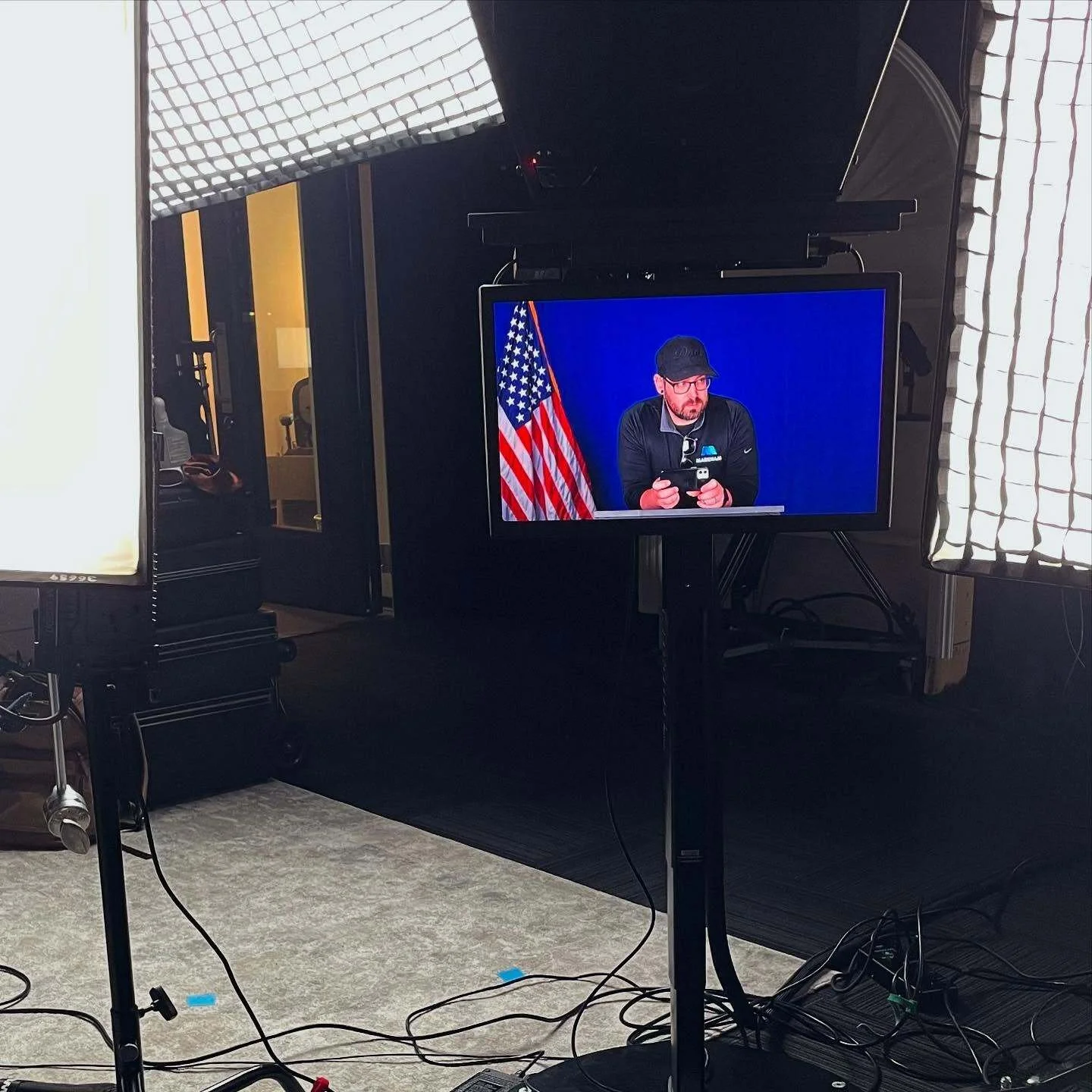
Today, Tim works closely with Markham’s producers and creative teams to design and execute the technical side of live events.
Before an event, his days may include pre-production calls, drawing technical plans in Vectorworks, ordering equipment, refining budgets, and staffing production crews. That work often happens while several other events are moving forward at the same time.
Once on-site, Tim leads the production team from load-in through load-out. Depending on the event, he may serve as Technical Director or Show Caller, oversee the setup process, align departments around shared objectives, and make sure engineers and technicians have the information and resources they need.
Often, Tim is already advancing the next production before the previous one is fully closed. Behind each phase is a level of communication and coordination that audiences rarely see.
“We often have to redesign, redraw, and re-spec events as they evolve,” he said. “Every change impacts other decisions. Power, rigging, internet, labor, timing, budgets. Logistical planning is a process, not a decision.”
Even a change that appears small can affect multiple departments. Moving a screen may alter sightlines, power needs, camera placement, rigging plans, and labor schedules. Successful collaboration means understanding how every technical element supports the larger creative vision rather than competing with it.
“Everyone must have the big picture in mind and work symbiotically,” Tim said.
The goal is not only to create a strong plan. It is to give the team enough preparation to respond confidently when the plan changes.
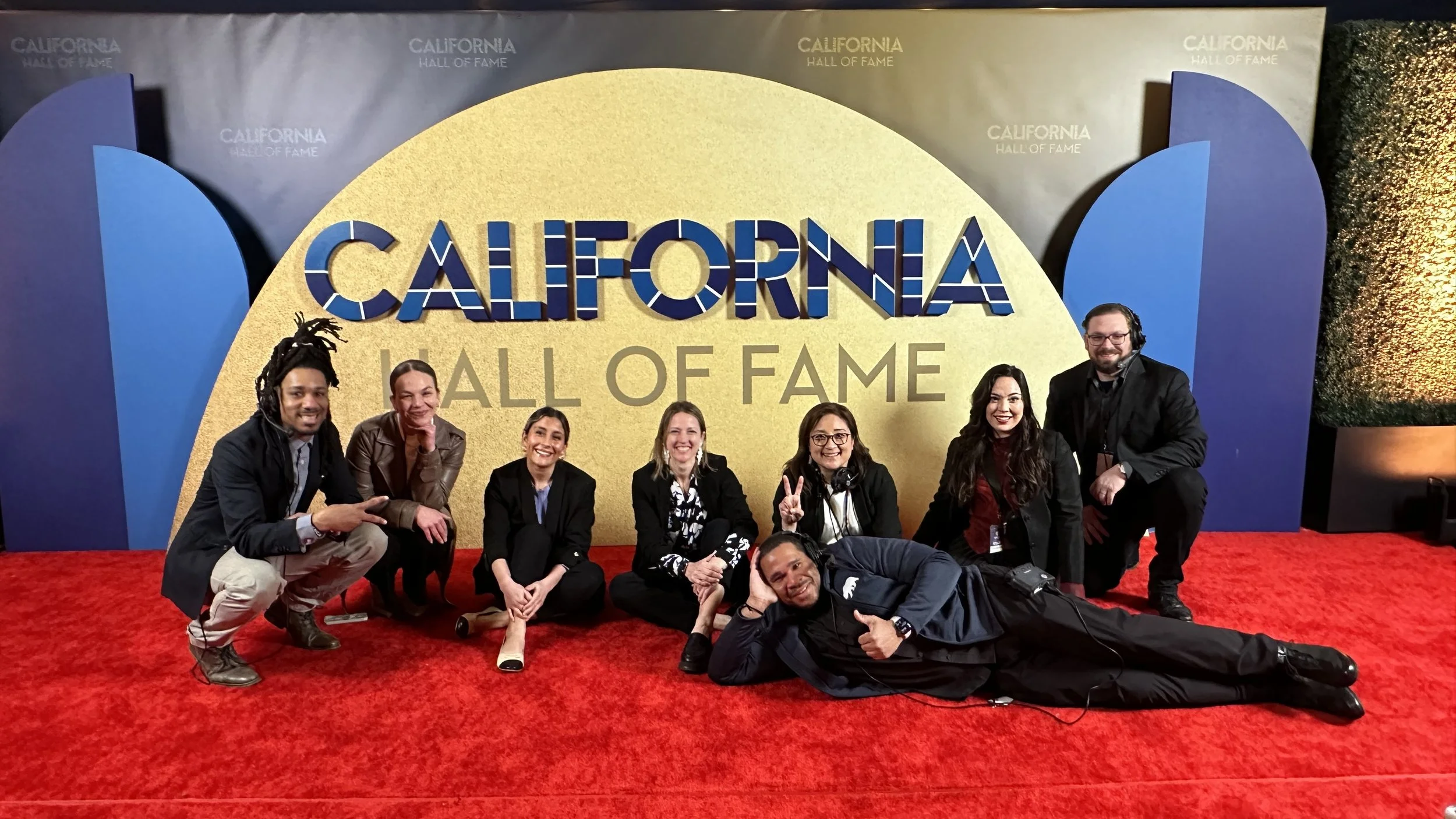
The Markham team at the California Hall of Fame induction ceremony in Sacramento. (2024)
The People Behind the Production
Tim’s years working on technical crews gave him firsthand knowledge of what production teams experience behind the scenes.
He understands the early call times, physically demanding load-ins, 14- or 16-hour workdays, late-night strikes, and quick transitions from one show to the next. He also remembers the production managers who made those difficult days more manageable by treating their crews with respect.
“Successful events are built by people, not the plans and equipment,” Timothy said.
For Tim, supporting a crew begins with preparation. Technicians need the right equipment, clear expectations, reliable information, and enough staffing to do their jobs well. They also need meals, breaks, water, and opportunities to step away during particularly long days.
“It’s very easy on the technical side of the industry to dehumanize yourself,” he explained. “You just become part of the department.”
Tim tries to remind the people around him that they are not simply positions on a staffing sheet. They are individuals performing demanding work, often under intense pressure.
Sometimes that means scheduling additional coverage so an engineer can take a break. Other times, it means making sure the team has food, water, shade, or air conditioning in a challenging environment.
That care also affects the quality of the final production.
Tim remembers that when he felt respected as a technician, he worked harder, stayed more invested, and approached problems with a more positive mindset. Those experiences now influence the culture he tries to create as a leader.
Learning to Lead Through Uncertainty
Tim does not define his career by a single flawless event or major accomplishment.
Instead, he remembers the moments that challenged him: a missed cue, an equipment failure, a difficult client conversation, or a responsibility he accepted before he was fully prepared to manage it.
“I have not batted 100 percent,” he said. “I have not had a perfect career.”
One early experience shaped the advice he now gives others. Eager to prove himself, Tim accepted a technical role that exceeded his experience at the time. He recognized that he needed support but waited longer than he should have to ask for it.
The team ultimately completed the work, but the experience stayed with him.
“I didn’t say the words, ‘I don’t know how to do this. I need help,’” Tim recalled.
Since then, those words have become central to the way he thinks about professional growth.
“Careers are built off the words ‘I don’t know,’” he said. “Admit when you don’t know something, and someone will teach you for the next time.”
That lesson also informs the environment Tim creates for his own teams. He wants the people working alongside him to feel comfortable raising concerns, asking questions, and requesting support before a manageable challenge becomes a larger problem.
For Tim, strong leadership does not mean entering every production with all the answers. It means recognizing what the moment requires, drawing on the knowledge of the people around you, and taking responsibility for finding the best path forward.
“You can spend 10 minutes talking about the problem, or you can spend two minutes fixing it,” he said.
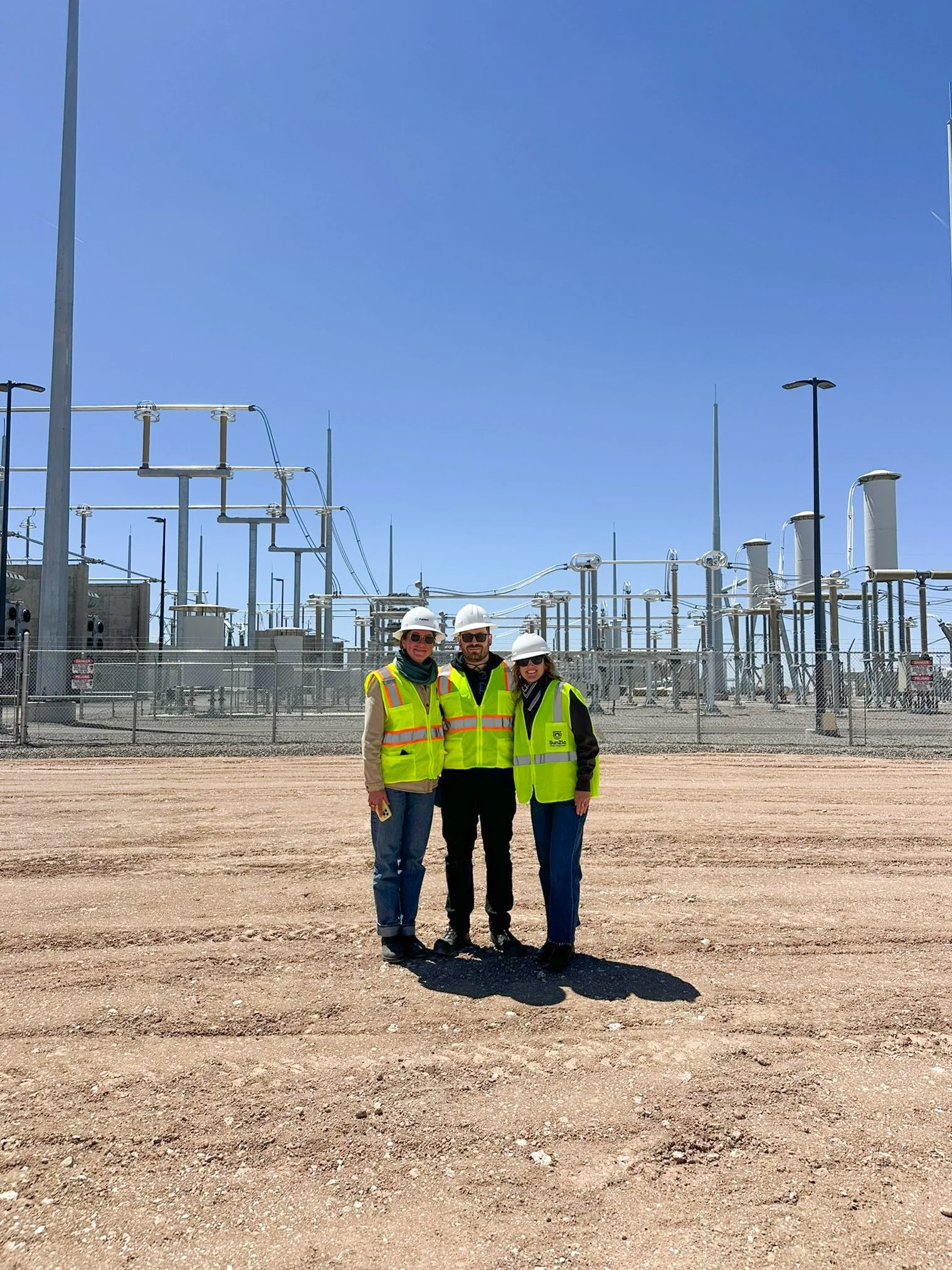
Tim with his colleagues on-site at the opening of Pattern Energy’s new converter station in Corona, New Mexico. (2026)
The Work Behind 90 Minutes
One of Tim’s recent projects with Markham offered a striking example of how much work can sit behind a relatively brief program.
For the opening of Pattern Energy’s converter station in New Mexico, the team was producing an event in a remote location with limited nearby resources. Vendors and equipment had to travel from several states, with tenting coming from Colorado, power and HVAC support coming from El Paso or Santa Fe, and the production company traveling from North Carolina.
The team had to ensure that the site was ready before each new group arrived. That meant coordinating the tent, power, air conditioning, shade, equipment, labor, and production schedule across long distances and changing weather conditions.
“It was tough,” Tim said. “You are in the middle of nowhere, in the middle of the country, with minimal resources.”
“We did an event for an hour and a half, and then it took a day and a half to tear it down,” he said.
The project demonstrated the hidden scale of live production, but it also reinforced Tim’s belief in teamwork. No single department or individual could have delivered the event alone.
“It was a team effort, but we got there,” he said.
Watching the Crowd, Not Just the Stage
Large-scale concerts remain some of Tim’s favorite productions. Yet when the performance begins, he often finds himself watching the audience instead of the artist.
He looks for signs of connection. Are people laughing, smiling, and paying attention? Are they distracted or scrolling through their phones? Is a lighting fixture creating glare for part of the room? Does the audience feel included in what is happening?
“The client could be ecstatic,” Tim said. “Everybody could be super happy and celebrate. But if your audience doesn’t go home with the same feeling, it really wasn’t that successful.”
For Tim, the attendees ultimately determine whether an event becomes memorable.
A polished stage, sophisticated technology, and a perfectly executed cue sequence all matter, but they are tools for creating connection. Whether the person onstage is an artist, an executive, a public official, or a community leader, the event succeeds when the audience feels part of the experience.
That focus has also given Tim a deep appreciation for Markham’s mission-driven work. Through nonprofit, advocacy, and community events, he sees production as a way to help organizations amplify important ideas and reach the people they hope to serve.
“We get to do cool work,” he said. “We get to be part of that bigger picture of bettering the community for everybody.”
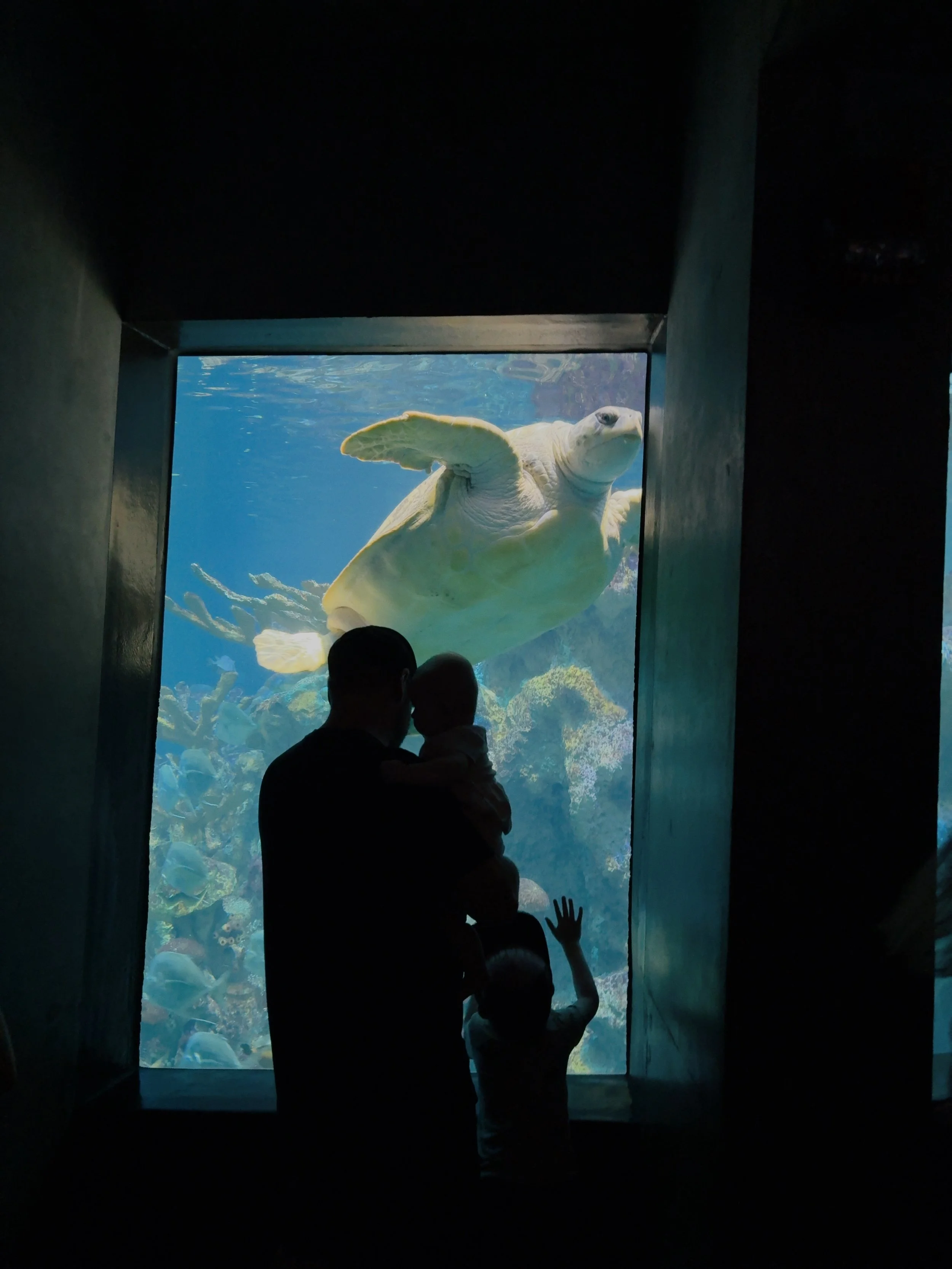
Tim with his family at a marine life center. (2024)
Finding the Right Team at Markham
Tim first came to know Markham through freelance technical opportunities offered by Director of Production Caliph Mathis.
When Tim decided to leave his previous position, he planned to step away from full-time employment and focus on freelance audio work and his own small business. Caliph presented the rare opportunity that made him reconsider.
“The only person I would consider this for is you,” Tim remembers telling him.
Caliph’s reputation and trust carried weight. Tim had worked with him earlier in his audio career and respected the way he led teams, organized productions, and prepared people to succeed.
Tim’s eventual onboarding with Markham was fittingly unconventional.
While visiting a marine life center in Florida with his family, Tim received a reminder that his onboarding call was about to begin. Moments earlier, he had been looking at the center’s resident pufferfish, Walter.
With no reliable cell service, Tim ran to a nearby hotel and found its small business center. He disconnected a hardwired internet cable, connected his own router, and joined the call.
“The rest was history,” he said.
Once at Markham, Tim found a culture that aligned closely with his own people-first philosophy.
“If you put a flag up and say, ‘I need help,’ everybody says, ‘What do you need?’” he said.
Instead of operating as individuals under the same company name, Tim saw a team that treated each project as a collective responsibility.
He also found leaders who gave him the systems and expectations he needed to succeed while allowing him to develop an approach that worked for him.
“There are multiple ways to do things, and you’re going to do things the way you need to do them,” Tim said. “But there is still a level of expectation and deliverables that you need to maintain.”
That environment has continually challenged him to raise his own standards, contribute wherever he can, and grow alongside the team.
“Success is a team effort,” he said, “and I am proud to be part of it.”
Staying Human in a Demanding Industry
Outside of work, Tim has learned to value quiet, balance, and time with his family.
Growing up in New Paltz, New York, he developed an early appreciation for music and the arts. He remembers cashing his paychecks and heading directly to Rhino Records, where he would buy anything that caught his attention, including, by his own admission, some very bad music.
Today, living in Sussex, New Jersey, he finds inspiration in a slower pace. With the Appalachian Trail nearby, he spends time walking, hiking, visiting local venues, and enjoying his community with his family.
The change reflects a lesson Timothy learned during the COVID-19 pandemic. After years of prioritizing work and career advancement, he realized he had gradually given up many of the interests and relationships that made him feel like himself.
“It is so easy to lose yourself in this career,” he said. “I promised myself not to lose those things again.”
That perspective is also part of his advice to anyone entering live event production.
“You are a human. Treat yourself like one,” Tim said. “Advocate for yourself and your health.”
He encourages emerging professionals to remain curious, continue training, refresh their technical knowledge, and accept that mistakes are part of the process. Technology will keep changing, events will continue evolving, and no one will enter every production with all the answers.
What matters is being willing to learn, asking for help when it is needed, and treating the people beside you with the same care you hope to receive.
For Tim, that is the foundation of great production. The equipment may make an event possible, but people are what make it work, and connection is what makes it matter.