
Behind the Show: Caliph Mathis on Production Leadership, Creative Execution, and What It Takes Behind the Scenes
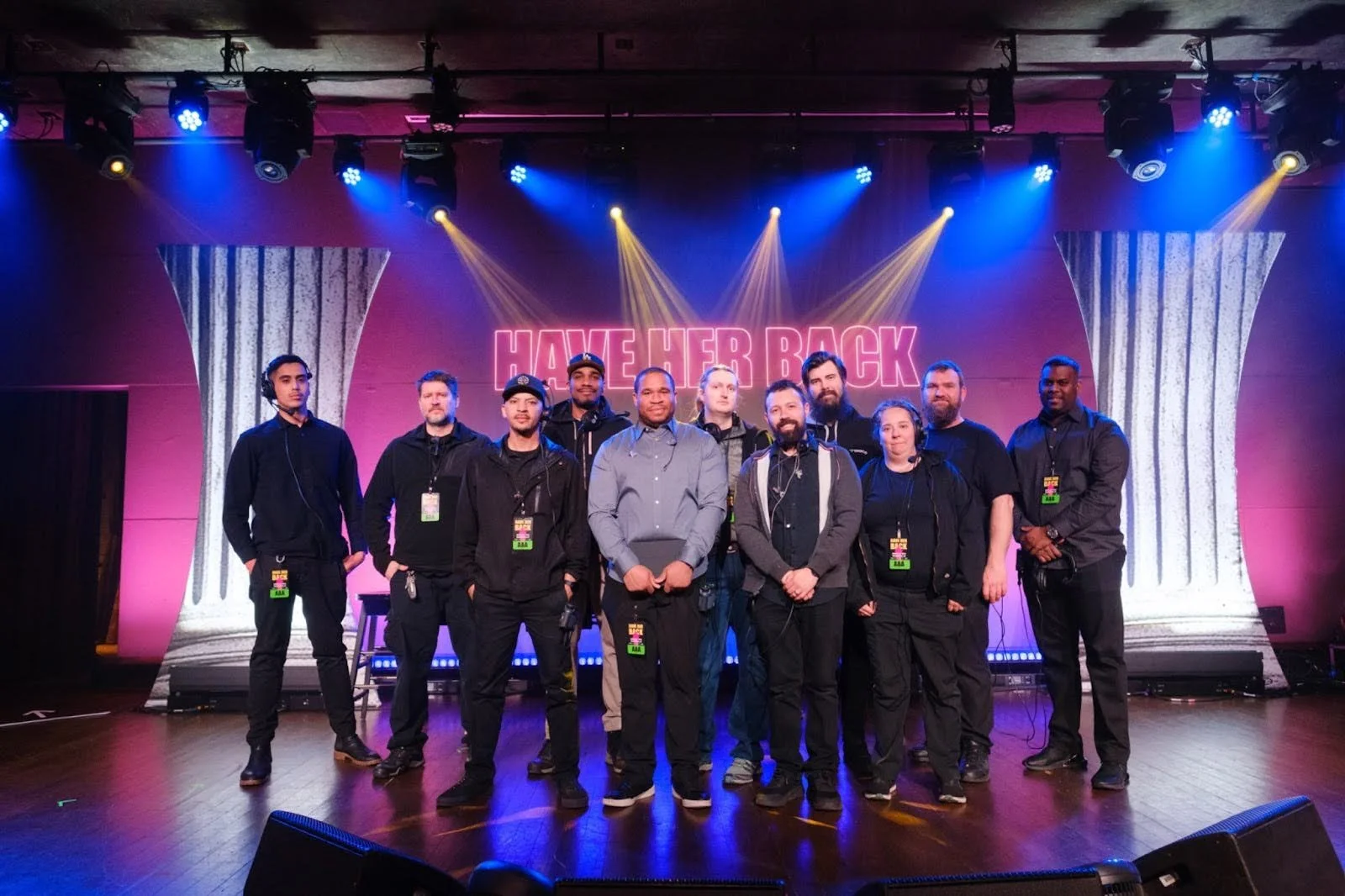
Caliph T. Matthis II, production lead at the “Have Her Back” event. Washington, DC (2022)
When production is done well, hardly anyone talks about it. The sound is clear, the cameras find the right angles, the room feels focused, and a complex run of show simply works.
Behind that apparent simplicity is Caliph T. Mathis II, known to many as CTMII. As Director of Production at Markham, he leads the behind the scenes work that helps each show feel seamless to the audience.
“I do a job that most people do not know exists,” he says. “It is complex, fun, and creative, and one small change can change everything.”
Over the last thirteen years, Caliph has led production for political, nonprofit, corporate, and live music events. At Markham, he oversees the full production picture, partnering with internal teams and trusted vendors to bring ambitious ideas to life while keeping safety, budget, and guest experience front and center.
From Brooklyn to Live Events
Caliph’s path into live events started by accident. A friend called one morning with a last minute request to help set up an event. He showed up and ended up working for a producer he now considers a mentor, who opened the door to his first full time role in the industry.
In that position, he supported several Markham projects, including Hiring Our Heroes, Hillary for America, From Paris to Pittsburgh, and others. After several years of collaborating from the vendor side, he eventually joined Markham full time in 2022.
“When I was young and trying to figure out what I wanted to do, I just knew I did not want to sit at a desk,” he explains. “What I loved about live events was the constant change and challenge. I loved it then, and I still love it now.”
That curiosity has since evolved into a career defined by technical precision, clear communication, and the ability to guide teams through high pressure moments.
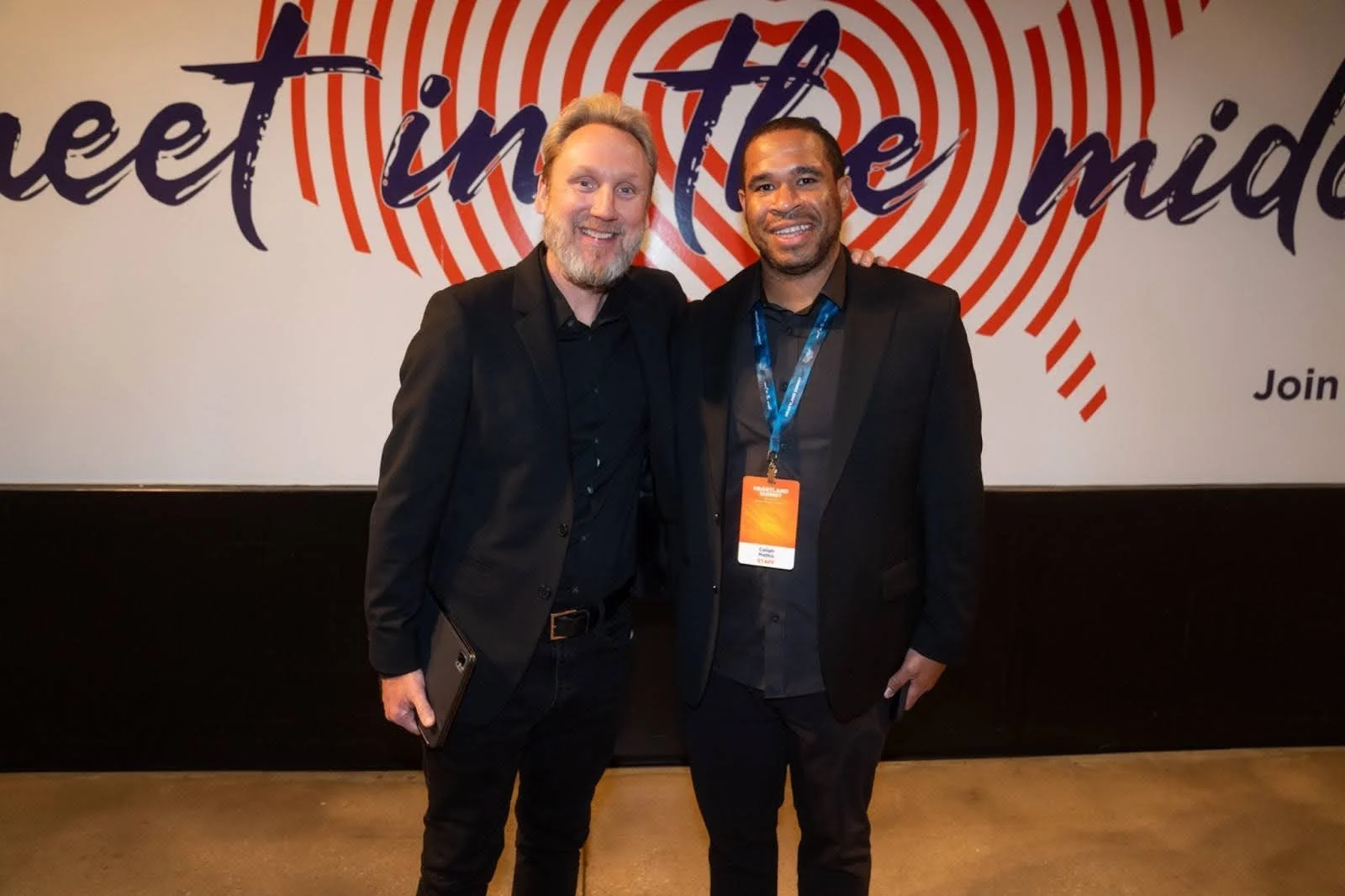
Caliph and Markham Founding Partner Greg Hale at the 2025 Heartland Summit. Bentonville, AR
Producing Across Sectors
Over the years, Caliph has worked in political, nonprofit, corporate, and live music spaces. No matter the audience, he sees the same core foundations at every show.
“Every event needs the same basics,” he says. “You need to hear the speaker or entertainer, they need to be well lit, and the room needs to look good.”
What changes is the pace and the likelihood of last minute adjustments. Corporate events usually follow a structured plan with small tweaks once things are underway. Political events are far more fluid.
“My experience in political events taught me how to be adaptable to change,” he explains. “In a corporate style event, the plan might change five to ten percent. In political events, the chance of last minute changes is much higher. Now I walk into every event more flexible than I did in the past.”
That mindset was essential when he led production for then presidential candidate Kamala Harris’s 2024 campaign rally on the Ellipse near the White House. Markham had eight days between the first site visit and event day, and three days to build an event site for roughly 80,000 attendees on the National Mall.
“It was the largest event I had ever planned and a very humbling experience,” he says. “We had to learn quickly and apply our production expertise at scale. The event went off without a hitch, and I am very proud of what we were able to deliver in such a short time for such an important moment in history.”
Producing Around the World
Caliph has supported events both domestically and internationally. Communication and safety standards are two of the biggest variables he watches.
In Zanzibar, his team worked with a local crew that had limited fluency in English. Rather than rushing through prep, he scheduled extra rehearsal time to walk through cues and agree on how to communicate during the show.
“Safety is always my number one priority,” he notes. “Most people on site share that mindset, but standards and protocols can look different around the world. It is important to align early with local partners so that everyone is on the same page and everyone makes it home safely.”
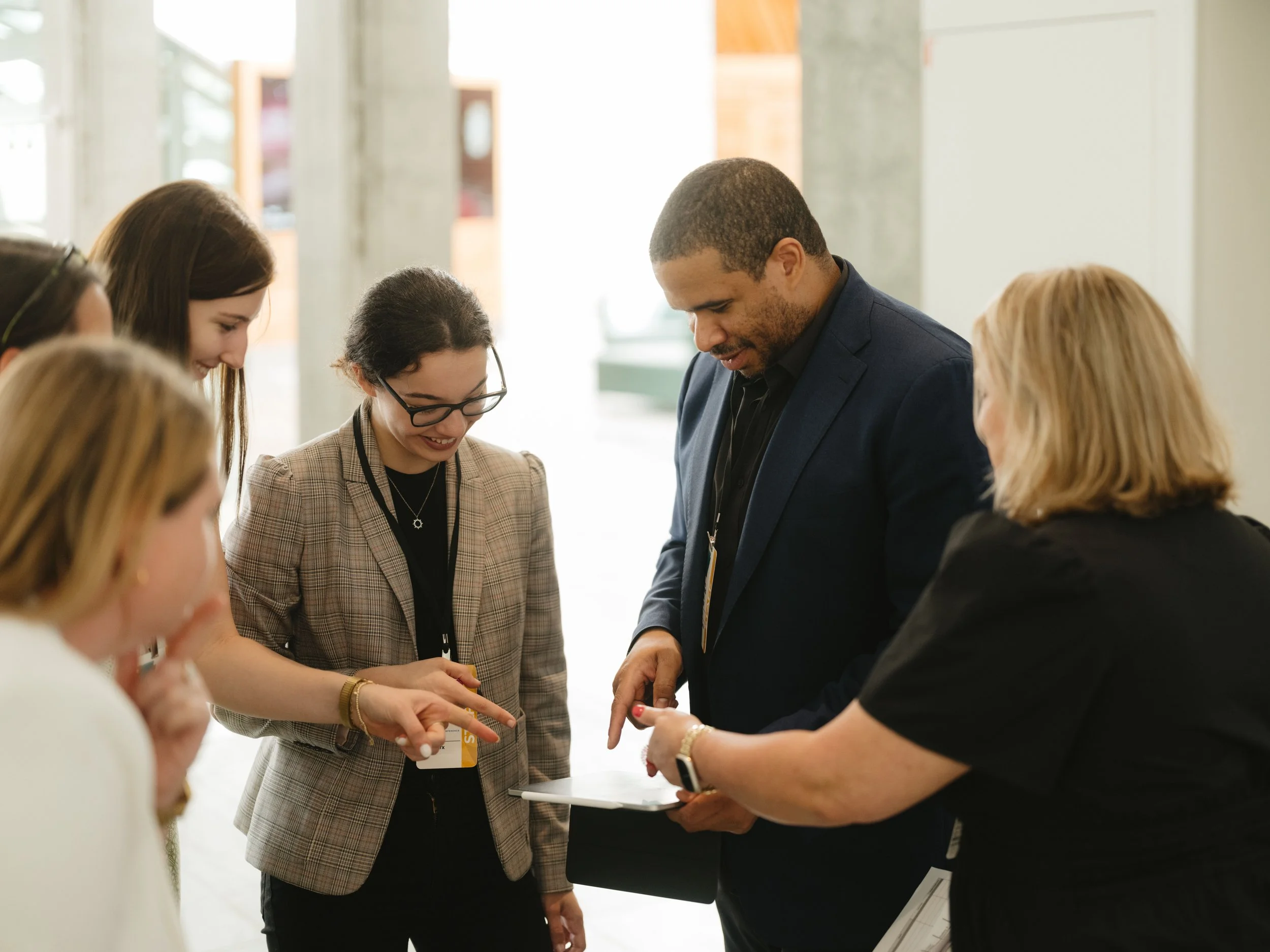
Center for Nonprofit Excellence event at Crystal Bridges Museum in Bentonville, AR (2024)
What Great Production Really Looks Like
Earlier in his career, attending festivals shaped Caliph’s vision of what impressive production meant. From the audience, it looked like L’Acoustic PA systems, complex rigging, LED walls, and lighting that moved in time with the show.
Now, his definition starts long before guests arrive.
“Great production means teamwork, detail, and planning for the unknowns,” he says. “It is thinking through every aspect of the project, from audio, lighting, and video to rigging and power. It is managing vendors and staff to execute complex cues and communicating the plan precisely, sometimes down to the millisecond.”
He sees each site through multiple lenses. A technician may feel a task is complete, but he will still walk the room, checking cable runs, stage skirting, sightlines, and safety.
“I am looking at things like whether a cable to a monitor is dressed properly so no one trips, or whether a stage skirt is straight instead of bunching,” he says. “During showtime, I am watching that the video plays in sync with the audio, that lights go down at the right beat, and that every cue lands when it should.”
If guests feel fully immersed and at ease, he sees that as a quiet win for the entire team.
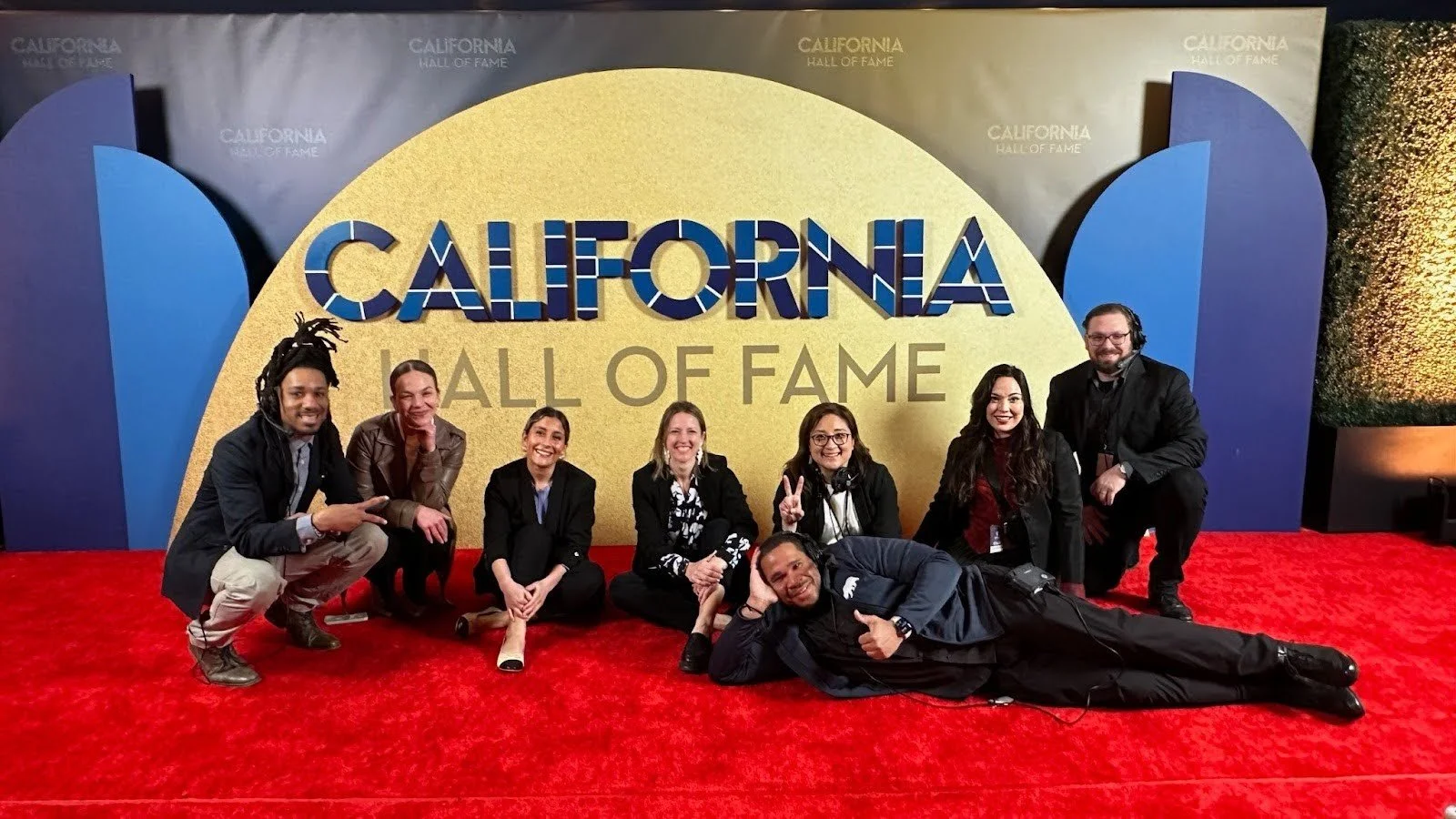
Markham team at the California Hall of Fame Celebration. Sacramento, CA (2024)
When Things Go Sideways
Even with strong planning, unexpected challenges are part of production. Caliph recalls one show where his team had fully dressed and soundproofed a room for a multi day speaker rehearsal, complete with drape and audiovisual gear. Four hours before the speaker was due to arrive, he got a call that the entire drape line had collapsed, taking equipment down with it.
“At that moment, our job was to make sure the rehearsal could still happen, even if it did not have every bell and whistle,” he says. He called the local IATSE hall and asked them to send everyone they could. While they mobilized, his team redrew the room plan with a focus on the highest risk areas for noise bleed, assessed what was damaged, and rebuilt. The rehearsal started a little late, but it happened, and the speaker was stunned at how quickly the room was back up and running.
For Caliph, moments like that reinforce why preparation and communication matter so much. He over communicates with vendors before load in, documents details in shared tools, and walks the floor continuously during builds so he knows the status of every department well before doors open.
Events That Make an Impact
For all the logistics and technical detail, what keeps Caliph in production is the purpose behind the work.
“At my last company, a lot of the work was corporate and mostly financial. It was talking heads in a ballroom,” he says. “At Markham, we are doing mostly cause based work, and those causes align with things I care about. We get to do cool events for good reasons with good people.”
That purpose was especially clear during the Biden campaign in the early days of COVID. Under strict health protocols, a core group of technicians produced events once or twice a week, often driving for hours together between assignments.
“In what felt like end of the world times, those were the only people you saw,” he remembers. “We formed a real bond, and that connection made the work meaningful.”
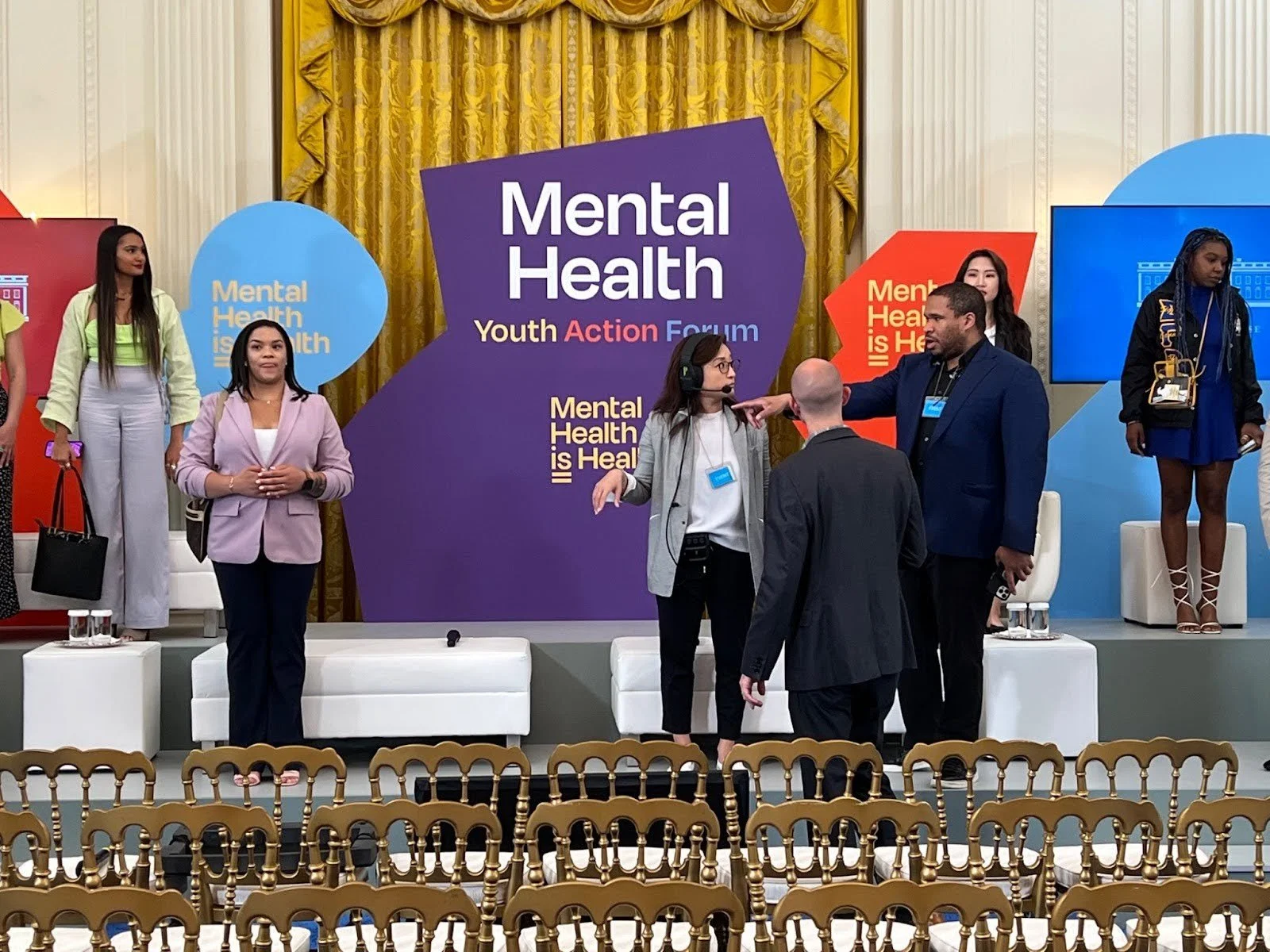
MTV Youth Mental Health Forum at the White House. Washington, DC (2022)
Advice For The Next Generation Of Producers
When asked what he would share with someone who wants to grow into a senior production role, Caliph keeps it simple.
“You must be flexible, be kind, and be vigilant,” he says. “Say yes to different types of events and roles that expand your experience. Be willing to do whatever work is needed, whether big or small, to get the job done.”
He also recommends treating the early years as a chance to see as many parts of production as possible.
“Work with audio for a day, then video, then scenic,” he says. “Always try to be the dumbest person in the room. Surround yourself with people who are smarter than you so that you can learn from them. Do not be afraid to say you do not know something. There is nothing wrong with asking someone to show you how it is done.”
Life Outside The Show
Outside of work, Caliph or CTMII, is a creative and an adventurer at heart. He has taken several trips to swim with orca whales and just recently got back from a trek in Patagonia. He is also an avid cook who likes to experiment with new dishes and ingredients from farmers’ markets.
“My job requires a lot of planning and precision,” he says. “Cooking and travel let me try new things and stay flexible. That balanced perspective informs how I respond when last minute changes or on site challenges come up. It keeps me grounded.”
Whether he is reworking a room diagram under pressure, walking a show site to check every detail, or building a production team that feels more like a group of colleagues and friends than a roster of vendors, Caliph brings the same approach to every project: lead with care, think ahead, and stay ready to adapt.
The result is work that feels seamless to the audience, even when the path to get there is anything but simple.